Power of using a Realtor! Not even the founder of ForSaleByOwner.com can sell his condo without a Realtor!!
ForSaleByOwner.com founder Colby Sambrotto uses a Realtor to sell his condo for $2.5 million..
Power of using a Realtor! Not even the founder of ForSaleByOwner.com can sell his condo without a Realtor!!
ForSaleByOwner.com founder Colby Sambrotto uses a Realtor to sell his condo for $2.5 million..
Aviara is a beautiful quiet community tucked away in the
desert in North Scottsdale, AZ. These modern built homes are a Scottsdale
secret for the price. Conveniently located near Desert Canyon Middle School and
Desert Mountain High School, Arabian Library, Sanctuary Golf Course, and a
shopping center is right across the street. You can walk to coffee shops,
fitness, sushi, a sports bar, spa, and many more wonderful stores and restaurants.
The family oriented community of Aviara consists of one and
two level homes. There is a large community pool and hot tub located near the
entrance fountain of Aviara. All the homes in Aviara are kept immaculate with
shrubs, stone, and palm trees landscaping.
Aztec Park and Horizon Park are very close and host to just
about every park activity you can think of. Aztec Park is located next to
Desert Canyon Middle School and is walking distance from Aviara. Aztec Park has
a playground, picnic areas, baseball diamond, sand volleyball, basketball, and
tennis courts. Horizon Park is 24 acres that hosts 4 softball fields (lighted),
1 full and 2 half basketball courts, 5 sand volleyball courts (lighted), 2
tennis courts, 2 playgrounds, dog park (off leash), restrooms, and a community
center that offers after school programs.
Aviara has around 150 homes with an average square footage
of 1,900 square feet and an average price of $260,000. Some homes have private
pools as well.
Click here to see homes that are currently for sale in
Aviara Scottsdale, AZ
Aviara is one of many wonderful communities located in
Scottsdale Arizona.
View Larger Map
If you would like more information on homes in Aviara or
other communities in Arizona please contact Branka Realty 480-330-3551 or
Branka@brankarealty.com . You can always visit our website for more Desert Community Living.
The Desert Botanical Garden is a 140 acres botanical garden located within Papago Park in Phoenix, Arizona, USA. Founded by the Arizona Cactus and Native Flora Society in 1937 and established at this site in 1939, the garden now has more than 21,000 plants, in more than 4000 taxa, one-third of which are native to the area, including 139 species which are rare, threatened or endangered. Of special note are the rich collections of agave (176 taxa) and cacti (10,350 plants in 1,350 taxa), especially the Opuntia sub-family. Plants from less extreme climate conditions are protected under shadehouses. There is an Australian collection, a Baja California collection and a South American collection, all of plants adapted to desert conditions. Several ecosystems are represented: a mesquite bosque, semidesert grassland, and upland chaparral.
For more than 70 years, the Desert Botanical Garden has been teaching and inspiring visitors from the local community and around the world, providing research, exhibits and more designed to help us understand, protect and preserve the desert’s natural beauty. Today, the Garden features:
8 a.m. – 8 p.m.|7 a.m. for members
1201 N. Galvin Parkway Phoenix, AZ 85008
View Larger Map
Admission to The Desert Botanical Garden:
$18.00 Adults age 19-59
$15.00 Seniors age 60+
$10 Students age 13-18
$8 Children age 3-12
Free for Members and Children under 3
They do accept AAA discount
Sedona is a city that straddles the county line between Coconino and Yavapai counties in the northern Verde Valley region of the U.S. state of Arizona. The population of the city is 10,031.
Sedona’s main attraction is its stunning array of red sandstone formations, the Red Rocks of Sedona. The formations appear to glow in brilliant orange and red when illuminated by the rising or setting sun. The Red Rocks form a breathtaking backdrop for everything from spiritual pursuits to the hundreds of hiking and mountain biking trails.
Sedona is named after Sedona Arabelle Miller Schnebly (1877–1950), the wife of the city’s first postmaster, who was celebrated for her hospitality and industriousness.
Sedona is in the Upper Sonoran Desert of northern Arizona. At an elevation of 4,500 feet (1,372 m), Sedona has mild winters and summers.
According to the United States Census Bureau, the city has a total area of 18.0 square miles (46.0 km²), nearly all of it land.
The famous red rocks of Sedona are formed by a layer of rock known as the Schnebly Hill Formation. The Schnebly Hill Formation is a thick layer of red to orange-colored sandstone found only in the Sedona vicinity. The sandstone, a member of the Supai Group, was deposited during the Permian Period.
Sedona played host to more than sixty Hollywood productions from the first years of movies into the 1970s. The small town, which served as a kind of microcosm of Hollywood history, sits about 120 miles north of Phoenix, nestled between thousand-foot-high walls of stone in lushly forested Oak Creek Canyon and the wide open space of the Verde Valley, and it was the diversity of this unspoiled landscape that made it such an ideal location to shoot outdoor scenes of movies. Stretching as far back as 1923, Sedona’s signature red rocks were a fixture in major Hollywood productions—including enduring favorites such as Johnny Guitar, Angel and the Badman, Desert Fury, Blood on the Moon, and 3:10 to Yuma—but typically were identified to audiences as the terrain of Texas, California, Nevada, and even Canadian border territory. For fifty years, this picturesque desert outpost quietly played host to Hollywood legends in the making, yet the town is rarely found in standard histories of the movies.
Sedona’s Hollywood legacy offers nothing less than a time line of history—of moviemaking in America and the popular culture of the years that shaped it. The story begins in the silent era, when Zane Grey’s The Call of the Canyon and Kit Carson, with Joseph P. Kennedy’s doomed movie superstar Fred Thomson, were filmed in the Oak Creek Canyon area just outside Sedona proper. The 1930s saw the arrival of a dozen B westerns, including four visits from silent film idol turned talkie cowboy star George O’Brien and the only Hopalong Cassidy film ever shot outside California. The decade also saw Sedona cast in her most historically significant movie role, as the promised land of milk and honey in Der Kaiser von Kalifornien, a Nazi western designed to validate Adolf Hitler’s schemes of territorial expansion to the people of Germany.
When John Ford’s production of Stagecoach pulled into town in 1938 (a Sedona connection that has eluded historians since the film was made), it set off three solid decades of A-picture activity—forty-four features through 1973, helped along by the construction of Sedona Lodge, the only permanent boarding and production facility ever built specifically for movie crews on remote location in the United States. During those years, many of Hollywood’s biggest names were photographed in front of Sedona’s signature landscape, from Errol Flynn to Gene Tierney, John Wayne to Joan Crawford, James Stewart to Lizabeth Scott, Robert Mitchum to Elvis Presley.
Sedona (which promoted itself as “Arizona’s Little Hollywood”) wasn’t only a cinematic romping ground for cowboys. In the years that followed World War II, shadows darkened the scenery to add psychological complexity to a number of early film noir dramas, like Leave Her to Heaven, while at the same time a secret battle involving blacklisted Broken Arrow screenwriter Albert Maltz, a prominent member of the “Hollywood Ten”—the victims of the anti-communist witch hunts that came to symbolize America’s Cold War paranoia—was being fought on the same dusty ground.
The quality of uniquely situated real estate in Sedona never has been questioned. This area has location, location and more location! What has been of concern is availability. However, due to the diligence of courageous developers who acquired parcels of land previously not known to be available, this city is home to a selection of the finest, new residential communities found anywhere in the world.
The Sedona Chamber of Commerce offers first class visitor services. Our visitor center assists more than 350,000 visitors a year, not to mention the thousands of visitor inquires via phone and email.
While in Sedona, make sure you visit our Uptown Visitor Center for maps, directions, suggestions or to purchase your Red Rock Pass.
The Chamber Visitor Center volunteers and staff also provide other services to visitors and the community at large. These include, but are not limited to:
Sedona Arizona is one of the most beautiful places on earth and is a prestine location for Desert Community Living.
View Larger Map
Power Ranch is a multi-award winning community voted as the best master planned community in 2003, 2004 and 2005 by Ranking Arizona. Power Ranch is located in Gilbert Arizona which is one of the largest growing cities in the United States. From the moment you drive into Power Ranch you will no longer feel as though you are in the desert. Power Ranch prides itself with lush green landscaping in each of the 11 different neighborhoods. Each neighborhood has a unique feel from an assortment of trees that line the streets and different style homes. You will also find that the homes in each neighborhood of Power Ranch are conveniently located by parks and trails that run throughout the community.
Homes for Sale in Power Ranch from $50,000 to $250,000
Homes for Sale in Power Ranch from $250,000 to $500,000
Homes for Sale in Power Ranch from $500,000 to $750,000
Homes for Sale in Power Ranch from $750,000 to $1,000,000
Power Ranch has grown to be so large that they now have two clubhouses. The Ranch House Clubhouse is located in the southern part of power ranch and is surrounded by a gorgeous lake stocked with fish to go fishing in. The Ranch House also has an Olympic size pool, volleyball court, basketball court, splash pad and a full size park.
The north side of Power Ranch is home to the Barn Clubhouse. The Barn is the newest addition to Power Ranch and offers a kid friendly pool, stocked lake for fishing and a walking trail that goes around the entire lake. The northern part of Power Ranch is in its final stages with homes being completed by DR Horton, T.W. Lewis and Richmond American.
If you are looking for a kid friendly and/or family oriented community, then look no further. For more information on homes for sale in Power Ranch and Power Ranch itself, please email me or call me at 480-330-3551.
Here is a video showing all the family friendly features of the Power Ranch Community in Gilbert Arizona.
Phoenix has a subtropical arid climate, typical of the Sonoran Desert in which it lies. Phoenix has extremely hot summers and warm winters. The average summer high temperatures are some of the hottest of any major city in the United States, and approach those of cities such as Riyadh and Baghdad. The temperature reaches or exceeds 100°F (38°C) on an average of 110 days during the year, including most days from late May through early September, and highs top 110 °F (43 °C) an average of 18 days during the year. On June 26, 1990, the temperature reached an all-time recorded high of 122 °F (50 °C).
Overnight lows greater than 80 °F (27 °C) occur frequently each summer, with the average July low being 81 °F (27 °C) and the average August low being 80 °F (27 °C). On average, 67 days throughout the year will see the nighttime low at or above 80 °F (27 °C). The all time highest low temperature ever recorded in Phoenix was 96 °F (36 °C), which occurred on July 15, 2003.
Precipitation is sparse during a large part of the summer, but the influx of monsoonal moisture, which generally begins in early July and lasts until mid-September, raises humidity levels and can cause heavy localized precipitation and flooding occasionally. Winter months are warm, with daily high temperatures ranging from the mid-60′s to low 70′s (18–22 °C), and low temperatures rarely dipping below 40 °F (4 °C).
Phoenix averages 85% of possible sunshine and receives scant rainfall, the average annual total at Phoenix Sky Harbor International Airport being 8.3 inches (210 mm). March is the wettest month of the year (1.07 inches or 27 mm) with June being the driest (0.09 inches or 2 mm). Although thunderstorms are possible at any time of the year, they are most common during the monsoon from July to mid-September as humid air surges in from the Gulf of California. These can bring strong winds, large hail, or rarely, tornadoes. Winter storms moving inland from the Pacific Ocean occasionally produce significant rains but occur infrequently. Fog is rare but can be observed from time to time during the winter months.
On average, Phoenix has only 5 days per year where the temperature drops to or below freezing. The long-term mean date of the first frost is December 15 and the last is February 1; however, these dates do not represent the city as a whole because the frequency of freezes increases the further one moves outward from the urban heat island. Frequently, outlying areas of Phoenix see frost, but the airport does not. The earliest frost on record occurred on November 3, 1946, and the latest occurred on April 4, 1945. The all-time lowest recorded temperature in Phoenix was 16 °F (−9 °C) on January 7, 1913.
Snow is extremely rare in the area but is possible. Snowfall was first officially recorded in 1896, and since then, accumulations of 0.1 inches (0.25 cm) or greater have occurred only seven times. The heaviest snowstorm on record dates to January 20, 1937 – January 21, 1937, when 1 to 4 inches (2.5 to 10 cm) fell in parts of the city and did not melt entirely for four days. Before that, 1 inch (2.5 cm) had fallen on January 20, 1933. On February 2, 1939, 0.5 inches (1.3 cm) fell. Most recently, 0.4 inches (1.0 cm) fell on December 21, 1990 – December 22, 1990 (but not in the city). Snow also fell on March 12, 1917, on November 28, 1919, and on December 11, 1985 (at the airport). On December 30, 2010, graupel fell, although it was widely believed to be snow. Not a single snowflake has hit downtown Phoenix since 1939.
Dust storms form on rare occasions. Three major ones occurred in the summer of 2011.
Seville’s 18-hole golf course is one of the most popular courses in Gilbert. With narrow fairways lined with homes and fast greens many golfers love the challenge that Seville Golf brings. After a fun day of golf, you can walk directly across the breeze way into Boleros. Boleros, one of the finest restaurants in Gilbert, is located directly across from the clubhouse. Boleros offers a contemporary style dining experience with American style food. If you are not in the mood for a nice sit down meal or are just wanting to have a nice beveage and relax, then go on over to the opposite side of the dining area at Boleros and take advantage of their full service bar and lounging area.
As you can see, Seville offers its residents a lifestyle like no other. In addition to the fine dining and challenging golf course, Seville residents can take advantage of a program they call “Seville Sports Club”. Here members can receive complementary body assessments, take advantage of social activities for all ages, swim in the resort style pool, play tennis in 1 of their 3 courts, play basketball on their full size court, enjoy movie night in the Theatre and much more. Once you visit Seville you will see why many residents are proud to call Seville “home!”
Click here to view homes currently for sale in Seville
We love Seville so much the main header picture on DesertComunityLiving.com is Seville. For more information about Seville Golf & Country Club living, contact Branka Knapp, Owner and Designated Broker of BRANKA Realty anytime; feel free to email me or call me at 480-330-3551.
Here is a video of Seville Golf & Country Club living to get a better idea of Arizona Desert Community Living.
The Apache Trail in Arizona was a stagecoach trail that ran through the Superstition Mountains. It was named the Apache Trail after the Apache Indians who originally used this trail to move through the Superstition Mountains.
The current Apache Trail links Apache Junction at the edge of the Greater Phoenix area with Theodore Roosevelt Lake, through the Superstition Mountains and the Tonto National Forest.
Today, much of the Apache Trail is paved, and the section east of Apache Junction is known officially as State Route 88. It is also the main traffic corridor through Apache Junction, turning into Main Street as the road passes into Mesa, and regains the Apache name by becoming Apache Boulevard in Tempe, ending at Mill Avenue. Prior to the completion of the Superstition Freeway in 1992, the Apache Junction portion of the Apache Trail was part of US Highway 60, which was rerouted to the Superstition once it was completed.
The Trail winds through 40 miles (64 km) of rugged desert mountains, past deep reservoir lakes like Canyon Lake and Apache Lake. The narrow, winding road is unpaved from just east of the town of Tortilla Flat to Roosevelt Dam. The trail requires caution when driving and it is not recommended for large RVs, SUVs, or caravans. Some large RV rental companies in the US do not allow their vehicles to be taken on this route.
Apache Trail is one of the most beautiful scenic drives near Phoenix, Arizona. With its winding road, breathtaking views, 3 lakes, a restaurant, Apache Trail will amaze everyone. Here is a little preview to show you of its magnitude and beauty.
One of many beautiful communities in Arizona is Val Vista Lakes. This award winning community has over 900 acres of land, seven gated communities and gorgeous lakes all around. Val Vista Lakes offers its residents a truly unique feeling in the middle of the desert. Val Vista Lakes is located in Gilbert, AZ which was recently rated as one of the fastest growing cities in the Nation. Located in the East Valley, Gilbert is a short 20 minute drive from downtown Phoenix.
Val Vista Lakes homes are newly designed and offer living styles for all budgets. If you are looking for a cozy condo right on the lake or a semi-custom home, Val Vista Lakes has something for you. Home pricing starts in the low $100,000′s and goes up to the mid $500,000.
Here are a few lists of homes currently for sale in Val Vista Lakes.
Val Vista Lakes Homes from $50,000 to $250,000
Val Vista Lakes Homes from $250,000 to $500,000
Val Vista Lakes Homes from $500,000 to $750,000
Val Vista Lakes Homes from $750,000 to $1,000,000
The clubhouse at Val Vista Lakes can be used for events such as weddings, birthday parties, holiday functions and more. Besides having a private clubhouse Val Vista Lakes also offers its residents an array of outdoor activities. Residents can enjoy the private Harbour Pool, play tennis or volleyball, enjoy BBQ’s by the lakes or even enjoy a peaceful boat ride on the lake.
For more information about the Val Vista Lakes community or Val Vista Lakes homes, contact Branka Knapp, Owner and Designated Broker of BRANKA Realty anytime; feel free to email me or call me at 480-330-3551.
Check out this video of Val Vista Lakes community to get a better idea of Arizona Desert Community Living.
Welcome to Desert Community Living of the beautiful and picturesque state of Arizona. I’ve lived and visited many states and cities of the United States but Arizona was the one that took my breath away and I instantly fell in love. It encompasses a little bit of everything: mountains, lakes, deserts, lush landscaping, and amazing sunny weather 365 days a year. Not to mention, the cost of living is very low. Housing is extremely cheap right now, taxes are very low, and the cost of goods and services is very fair, comparing to the rest of the country.
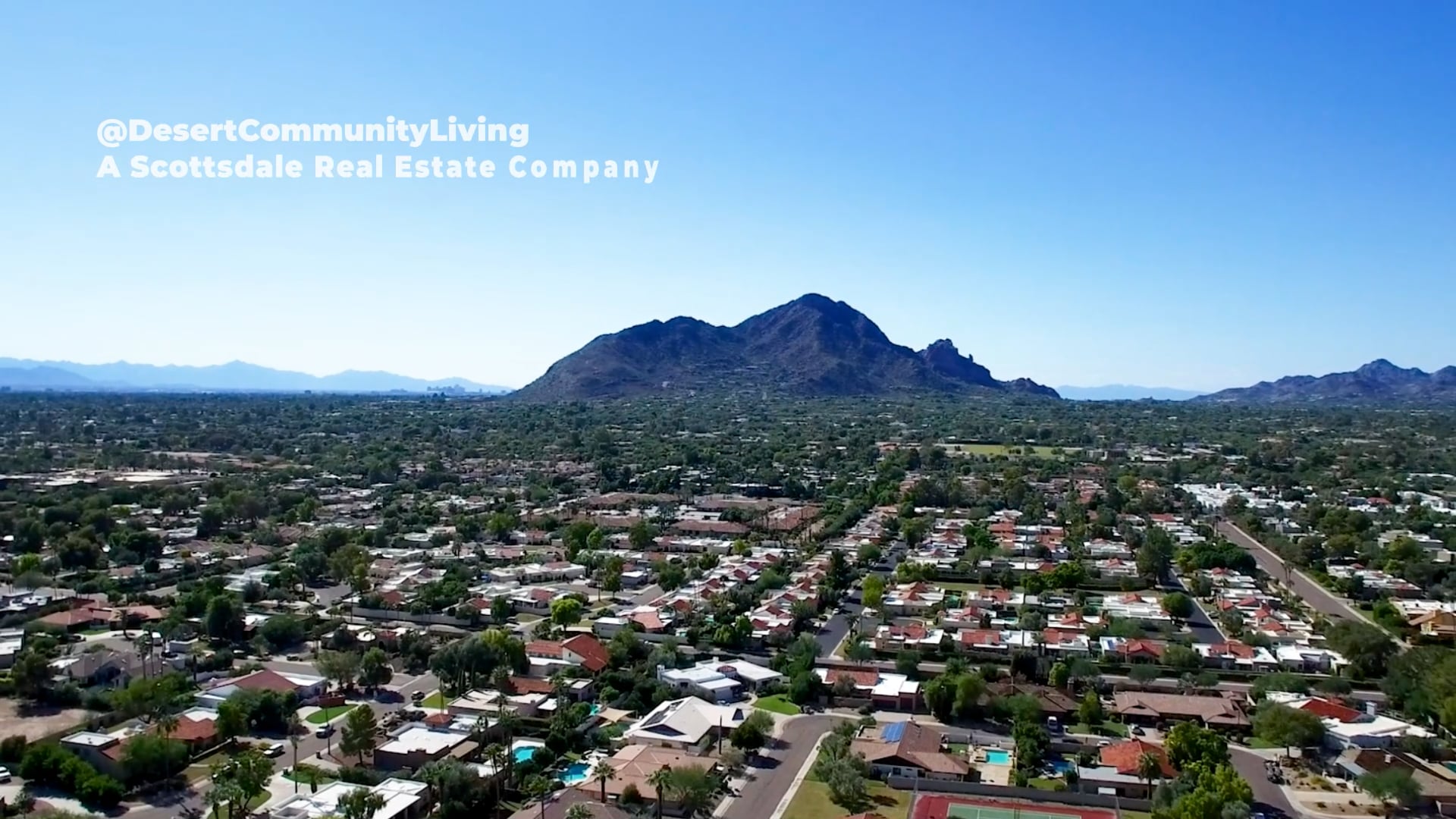
Here are a couple of pictures of Arizona Desert Living.